When philosophy turns into science
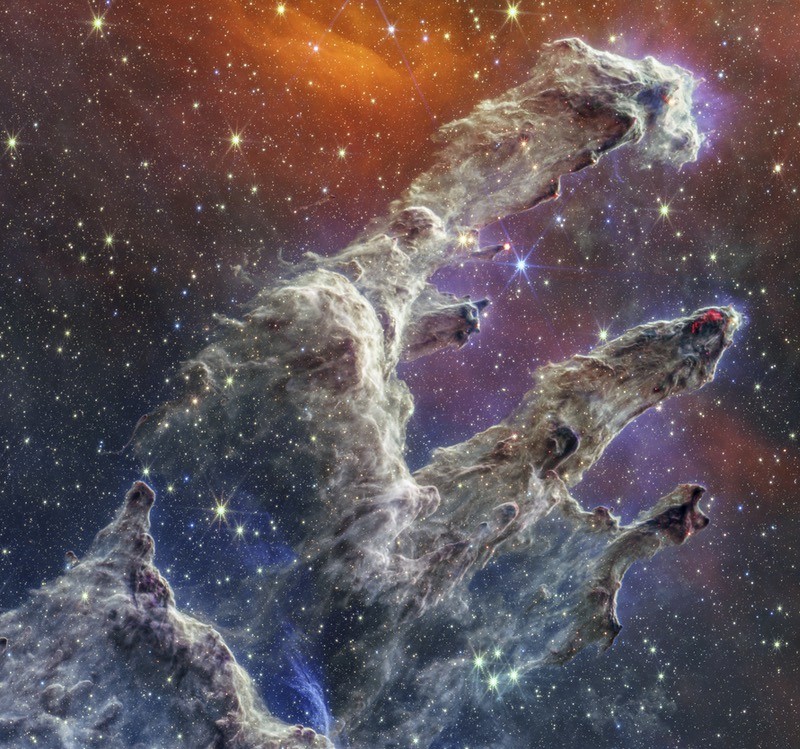
The science "star nursery"
Published
Apr 22, 2025
Topic
Philosophy
In Latin and Germanic Europe, philosophy is still often seen as a literary discipline. Until recently, it was even the subject with the most hours per week in the "literary cursus" at high school in France.
Philosophy is actually quite far from being a literary discipline. It is much closer to a scientific one. To be precise, I like to think of philosophy as a “science nursery”.
Let me explain.
Philosophy is about reasoning. It's about asking questions on any subject and trying to answer them in a rational way. Science is… almost the same thing actually.
The only difference is that science has contact with the real world. A science must propose experiments that allow us to sort between a true (and coherent) theory and a false (but still coherent!) theory. Let’s say science is philosophy plus real world contact.
Philosophy creates coherent systems. Science eliminates the "coherent but false" systems. Or rather, it ranks coherent systems from the most false to the least false.
In the history of science, many disciplines (all of them?) have moved from the “philosophy” category to the “science” category.
Psychology, for example, was until recently a philosophical discipline. People studied happiness, the soul, emotions, memory, sensations, and ideas. It was only in 1889 that Wilhelm Wundt opened the first experimental psychology laboratory, in Leipzig. Psychology then became a science.
A long time ago, even physics was part of philosophy. People wondered things like: What is everything made of? Why do things move? Is there empty space between things? Back then, they tried to answer these questions just by thinking and observing.
With Galileo, Newton, and Boyle, things changed: controlled experiments and measurement were introduced. From the 17th century, experiments and quantitative results became more important than pure speculation. This is how physics gradually emancipated itself from philosophy to become an autonomous science.
If you want to be the person who turns a philosophical discipline into science, it’s simple: you just have to find an experiment.
Good luck.
All the current branches of philosophy — epistemology (the study of what is true), ethics (the study of what is good), aesthetics (the study of what is beautiful), theology (the study of the concept of God), and many others — are just waiting to blossom into sciences. Stars born in a "star nursery".
You think it’s impossible? That we’ll never find an experiment to determine whether God exists, or whether something is beautiful or ugly? What do you think people said about psychology or sociology before they became sciences?